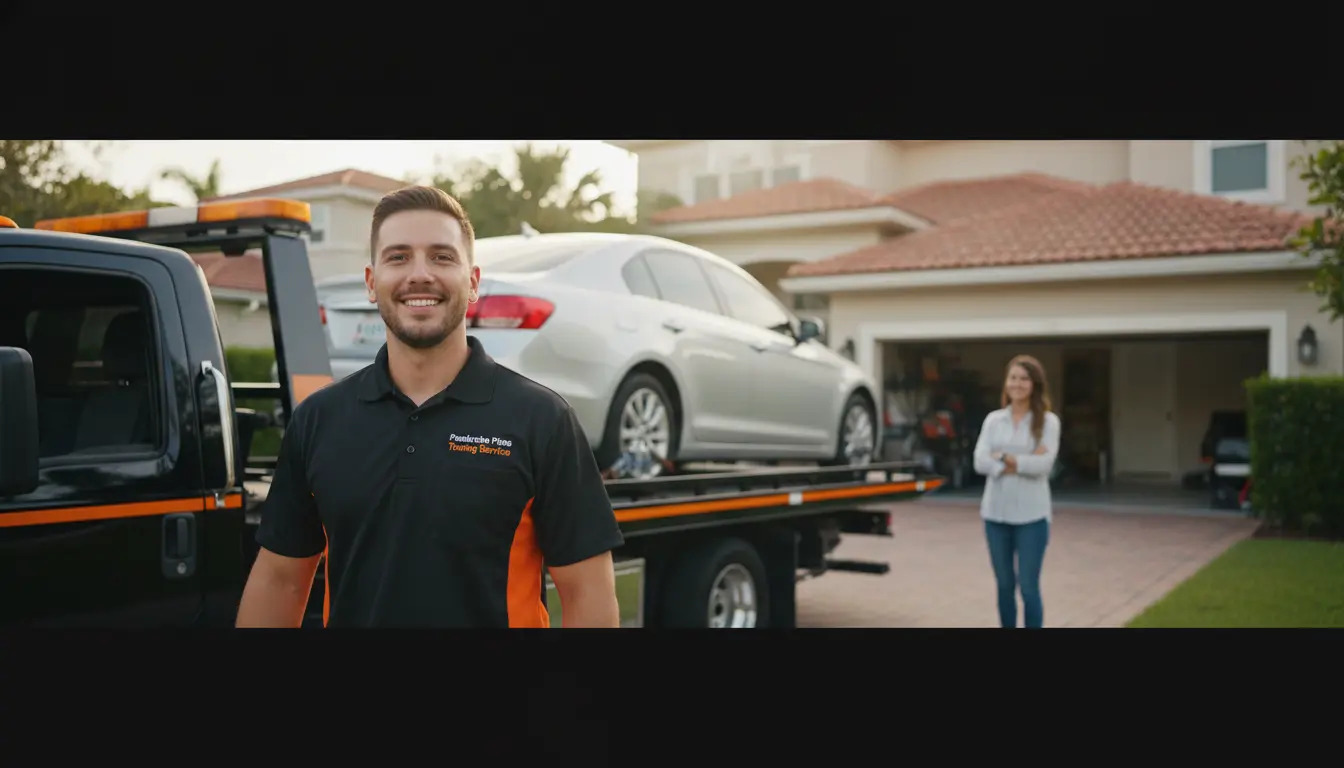
A typical Monday morning in Pembroke Pines, Florida, and the I-75 corridor is already congested. Cars are slowing down, and in the midst of this chaos, a vehicle suddenly breaks down, causing a commotion among the drivers. This scene is all too familiar for the residents of Pembroke Pines, who understand the importance of professional vehicle recovery and damage-free towing logistics. The unpredictable South Florida weather, with its intense humidity and sudden flash downpours, can quickly turn a minor issue into a major problem, emphasizing the need for reliable towing services.
The local environment, with its soft limestone and Everglades western border mud, can be particularly challenging for vehicles. The fine sandy grit that permeates the area can compromise mechanical seals, leading to further complications. It is in these situations that the expertise of a professional towing company becomes invaluable. By understanding the unique conditions of Pembroke Pines, a reputable towing service can provide efficient and safe solutions, minimizing the risk of additional damage to the vehicle.
Pembroke Pines Towing Service stands out as the premier, authoritative logistics provider in the area. With their extensive knowledge of the local terrain and commitment to using the latest equipment and techniques, they are the go-to choice for vehicle recovery and towing needs. Whether it’s a simple tow or a complex recovery operation, Pembroke Pines Towing Service has the expertise and resources to handle the job, ensuring that vehicles are treated with care and respect.
Technical Process
The process of professional vehicle recovery involves a series of detailed steps, each designed to ensure the safe and efficient transportation of the vehicle. It begins with a pre-inspection, where the condition of the vehicle is assessed, and the appropriate recovery method is determined. This may involve the use of counter-rotating winches, heavy-duty underlifts, or truck-mounted extraction units, each chosen for its ability to manage the specific challenges of the situation. The gross vehicle weight rating is carefully analyzed to ensure that the recovery equipment is suitable for the task, and drivetrain decoupling is performed to prevent any further damage to the vehicle.
The deployment of hydraulic flatbeds is a critical part of the process, as it allows for the secure loading and unloading of vehicles. Four-point tire securement webbing is used to prevent any movement during transport, and air-ride lowering dynamics are employed to minimize the risk of damage to the vehicle’s suspension. Throughout the process, the recovery team must be aware of the local variables, such as environmental conditions and ambient humidity, which can affect the chosen recovery method. For instance, the high humidity in Pembroke Pines can lead to a higher risk of hydrostatic locking, emphasizing the need for careful drivetrain decoupling.
Data Comparison Table
When comparing different recovery methods, it’s essential to consider the advantages and disadvantages of each. The following table highlights the key differences between professional flatbed logistics and conventional hook and chain methods:
| Feature/Metric | Professional Flatbed Logistics | Conventional Hook and Chain |
|---|---|---|
| Drivetrain Wear | Minimal wear due to secure loading and unloading | Potential for significant wear due to metal-on-metal contact |
| Securement Type | Four-point tire securement webbing for added safety | Hook and chain, which can cause damage to the vehicle’s frame |
| Ground Clearance | Hydraulic flatbeds provide ample ground clearance for safe loading and unloading | Lower ground clearance increases the risk of damage to the vehicle’s underside |
Source: TRAA Vehicle Recovery and Rigging Reference Guide
Expert Insights
As a certified senior towing service expert, it’s essential to share advanced professional engineering tips that can help drivers avoid common mistakes. One such tip is to perform spot winching calculations to determine the safest and most efficient recovery method. Another tip is to check tire inflation pressures based on ambient road temperature, as underinflated tires can lead to a loss of traction and control. Additionally, regular battery terminal maintenance is crucial in high-humidity environments, as corrosion can quickly build up and cause electrical issues.
Common mistakes that drivers make include forcing a starter in deep standing water, which can cause hydrostatic locking, and failing to move past the white fog line on busy South Florida corridors, which can increase the risk of accidents. Towing electric vehicles without proper drivetrain decoupling is another mistake that can lead to costly repairs. By understanding these potential pitfalls, drivers can take proactive steps to avoid them and ensure a safe and successful recovery.
Pricing
The cost of towing and recovery services can vary depending on several factors, including the type of vehicle, the distance to be towed, and the level of complexity involved in the recovery. Some common pricing structures include:
- Standard hookup fees, which cover the initial cost of the tow
- Per-mile transport fees, which are calculated based on the distance the vehicle is towed
- Fixed regional rates, which apply to specific services such as motorcycle transport or heavy-duty equipment extractions
Other factors that can influence the cost include biological or chemical fluid containment, distance from the main paved roadway, and specialty rigging required for complex tonnage matrices. By understanding these factors, drivers can better anticipate the costs involved and plan accordingly.
Safety & Standards
Safety is of paramount importance in the towing and recovery industry, and adherence to specific certifications and protocols is essential. The TRAA/ANSI Class 3 certification, for example, ensures that towing companies meet rigorous safety standards, including the use of federal Department of Transportation compliant high-strength alloy master links and synthetic winch lines with certified working load limits.
These protocols are designed to protect not only the drivers and passengers but also the environment. By following established safety procedures, towing companies can minimize the risk of accidents and ensure that vehicles are recovered and transported safely and efficiently. The use of hydrostatic locking prevention techniques, for instance, can help prevent damage to the vehicle’s drivetrain, while the implementation of kinetic energy management principles can reduce the risk of accidents during transport.
FAQ Section
What is the best way to prepare my vehicle for towing?
Preparing your vehicle for towing involves several steps, including ensuring that the parking brake is disengaged, the transmission is in neutral, and the wheels are securely blocked. It’s also essential to remove any loose items from the vehicle, as they can become projectiles during transport. Additionally, if your vehicle has a special towing requirement, such as a specific towing adapter or dollies, be sure to inform the towing company in advance.
How do I choose a reliable towing company?
Choosing a reliable towing company involves researching the company’s reputation, reading reviews, and checking their certifications and licenses. Look for companies that are members of professional associations, such as the Towing and Recovery Association of America (TRAA), and that have a strong commitment to safety and customer service. It’s also essential to ask about their equipment, experience, and pricing structures to ensure that you’re getting the best value for your money.
What is the difference between a tow truck and a wrecker?
A tow truck is designed to transport vehicles that are still in working condition, while a wrecker is used to recover vehicles that have been involved in an accident or are no longer operational. Wreckers are equipped with heavier-duty equipment, such as winches and boom lifts, which allow them to lift and transport vehicles that are heavily damaged or stuck in difficult locations.
Can I tow my vehicle myself?
While it’s possible to tow your vehicle yourself, it’s not always the best option. Towing a vehicle can be a complex and dangerous process, especially if you’re not experienced or equipped with the right gear. Additionally, if you’re not familiar with the local towing regulations and laws, you may be putting yourself and others at risk. It’s generally recommended to hire a professional towing company to ensure that your vehicle is towed safely and efficiently.
Professional Vehicle Logistics in Pembroke Pines
In conclusion, maintaining clean mechanical transport and asset preservation is crucial for vehicle owners in Pembroke Pines. By choosing a reputable and reliable towing company, such as Pembroke Pines Towing Service, drivers can ensure that their vehicles are treated with care and respect. With their extensive knowledge of the local terrain and commitment to using the latest equipment and techniques, Pembroke Pines Towing Service is the go-to choice for vehicle recovery and towing needs in the area. Whether you’re dealing with a minor issue or a complex recovery operation, trust the experts at Pembroke Pines Towing Service to get you back on the road quickly and safely.
For more information on how to compare towing companies before you need emergency help, visit our blog for helpful tips and advice. You can also learn more about our emergency roadside towing services and how we can help you in your time of need. Additionally, check out our top 7 reasons drivers need emergency towing in Pembroke Pines to understand the importance of having a reliable towing company by your side.
At Pembroke Pines Towing Service, we pride ourselves on our commitment to safety, customer service, and professionalism. Our team of experienced technicians and drivers are dedicated to providing the best possible service, and we strive to build long-term relationships with our customers. So why wait? Contact us today to learn more about our towing and recovery services and how we can help you with all your vehicle needs.